


.jpg)
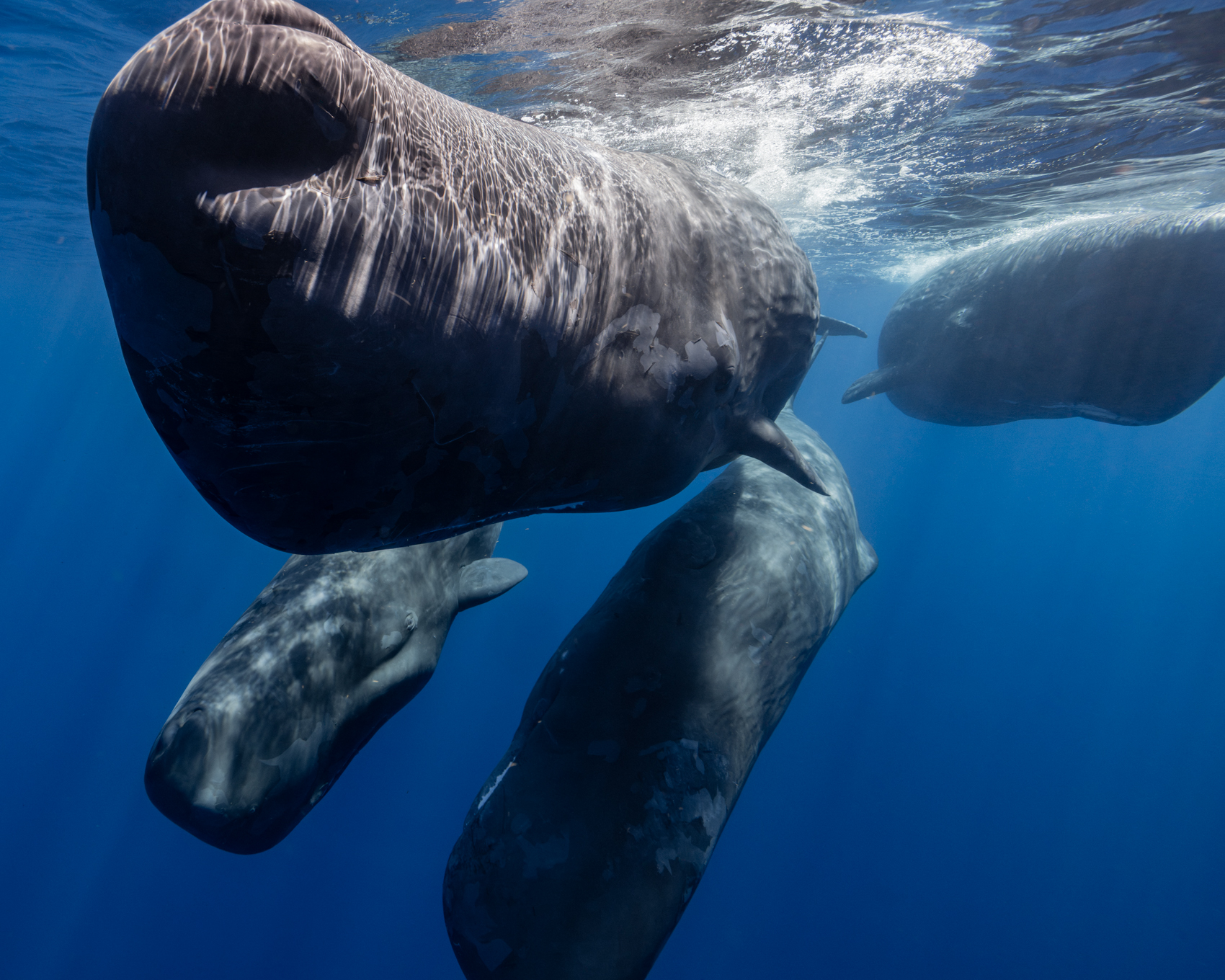
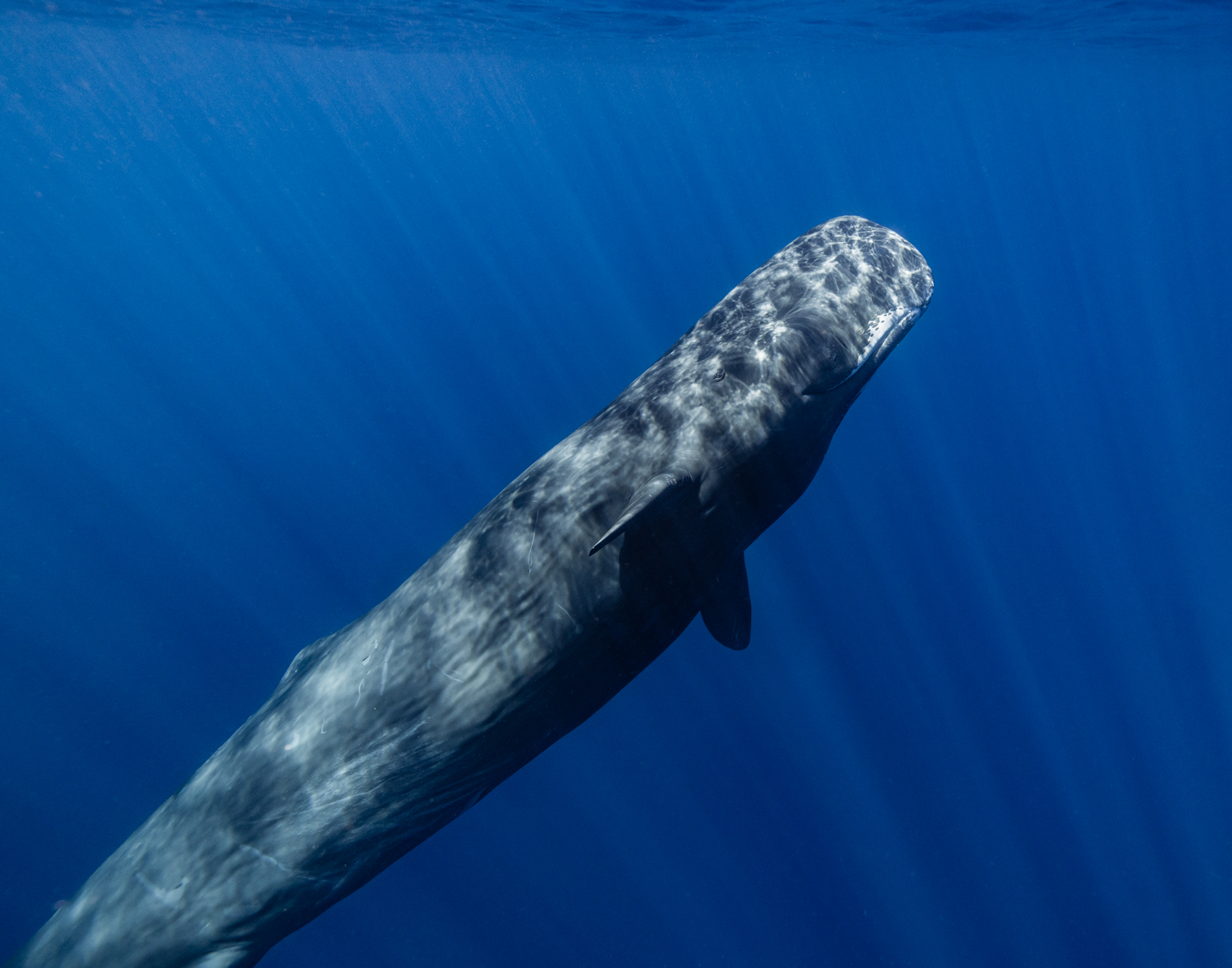
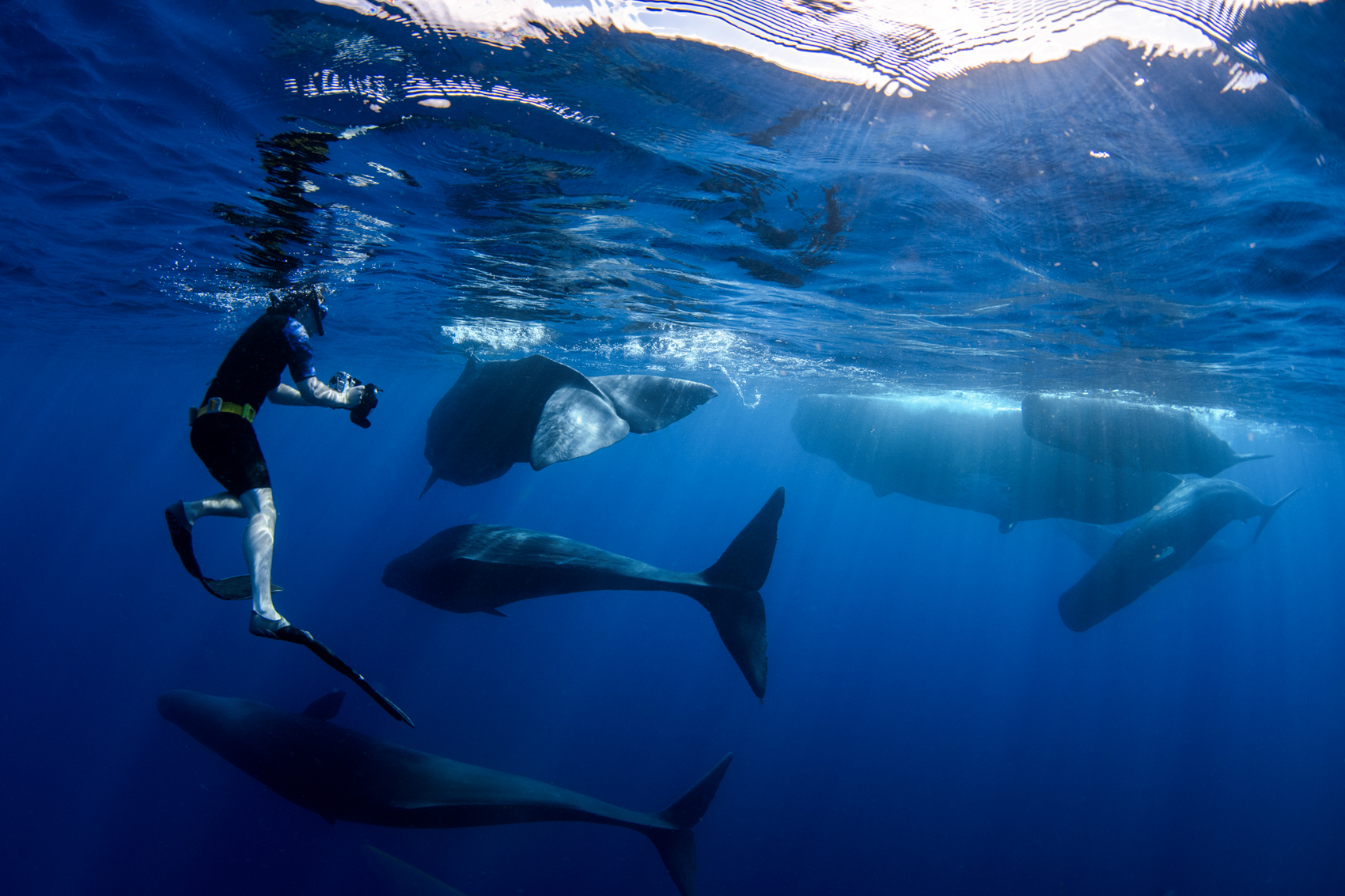
Beneath the ocean’s surface, something significant sits within these iconic foreheads: the largest brain of any animal on Earth.
At around 20 pounds, the sperm whale brain is five times the weight of a human's. While size alone doesn't define intelligence, evolution seems to favor the advantage, providing some support for the notion that size 𝘥𝘰𝘦𝘴 matter.
So what does a brain this big really mean?
Some believe these whales once learned to evade hunters—changing their behavior and possibly even sharing those lessons across clans. Like humans, they possess neurons tied to reasoning, memory, emotional awareness, and communication.
And it's their communication that has scientists leaning in.
In Dominica, researchers with Project CETI are using artificial intelligence to decode the whales' intricate clicking patterns, "codas," which vary between pods, like human dialects.
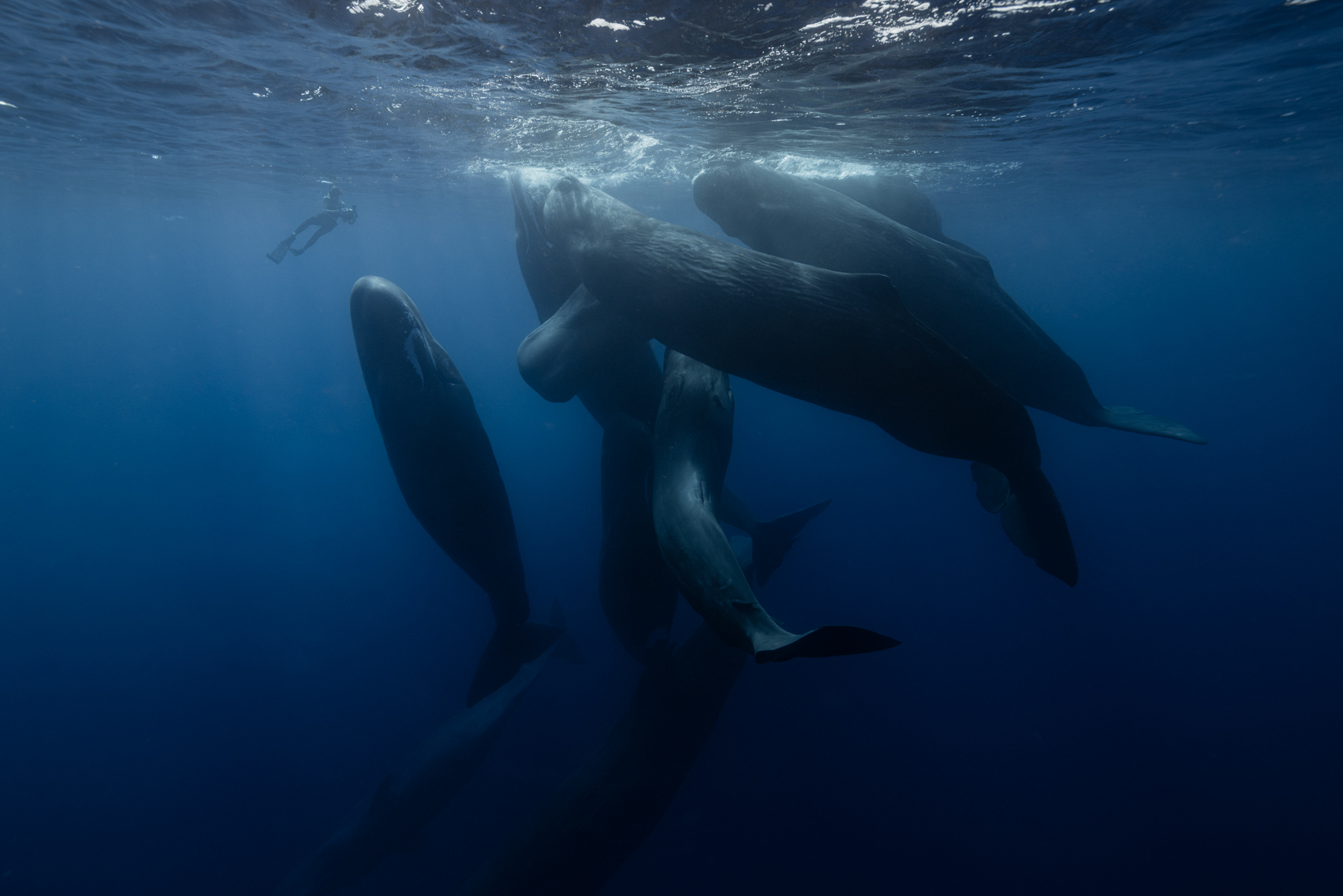
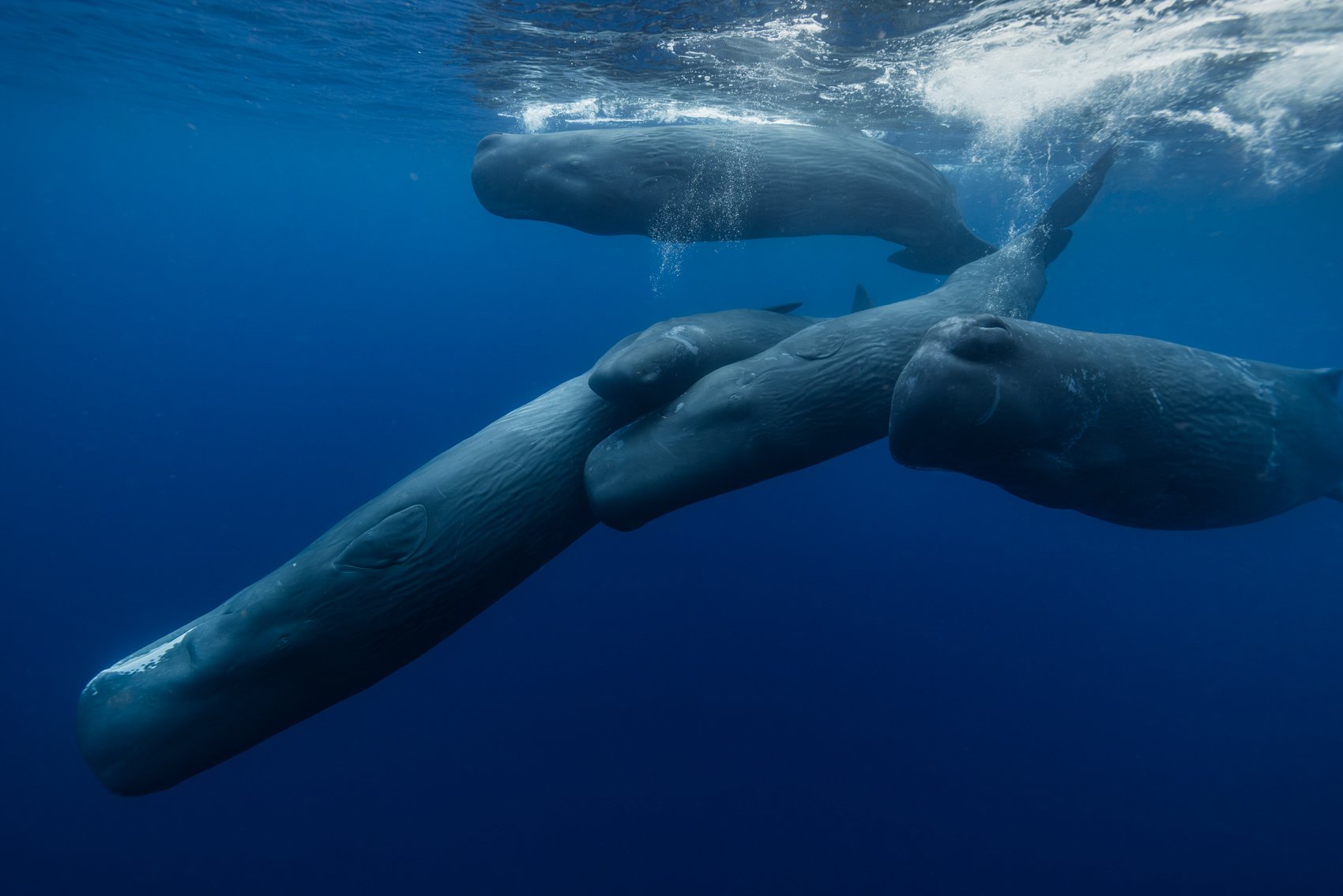
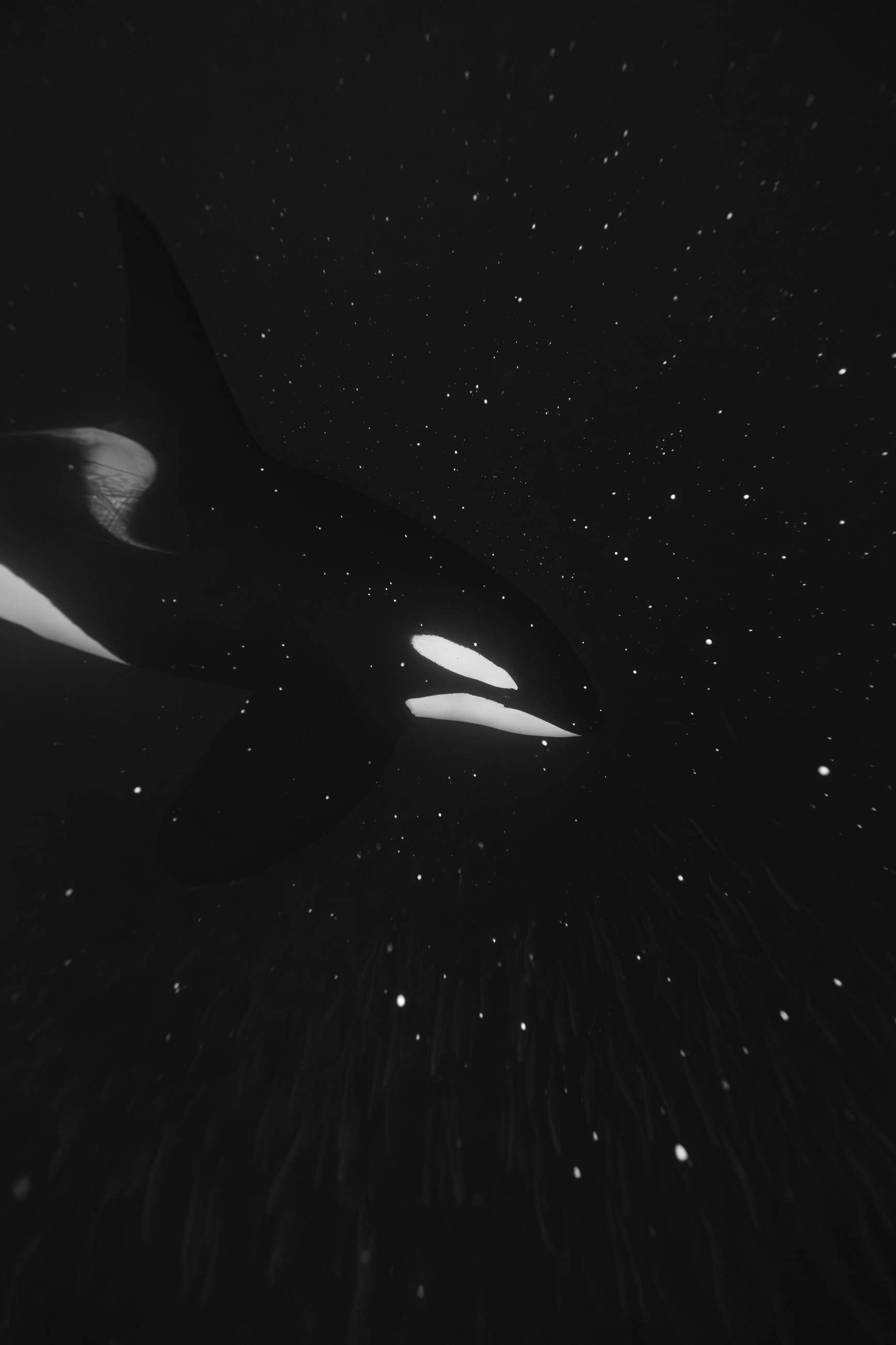
On my second day in the water, I was lucky enough to witness a social gathering: around fifteen whales rolling and rubbing their bodies together at the surface. As the pod drifted off, one female lingered. She swam directly toward me, releasing clicks loud enough to vibrate through my chest. Whales use these pulses to inspect objects (or people), turning upside down to receive the echoes through their jaw.
It's the kind of encounter you long for.
One where the interest and curiosity aren't solely on your end.
Now, the feelings are mutual.
It may be that these animals are sharing complex insights through their repeated clicks.
Or maybe they're simply saying hello.
Again and again.
If we're lucky, we might someday understand what they mean.
And maybe, we’ll get the chance to respond back.


LIMITED EDITION
A moment captured for a life on paper.
Eric works with a renowned print studio in Brooklyn, New York, known for decades of expertise in archival pigment printing. The local lab allows for a collaborative approach, ensuring that his intended vision is expressed in the final artwork. When cared for properly, archival pigment prints can last for over a century.
Archival Pigment Prints
Modern printmaking, refined. Pigment prints utilize state-of-the-art digital technology and high-quality pigment-based inks to achieve striking reproductions. A digital image is applied directly onto the paper using precision inkjet printers, ensuring both image quality and longevity.
Vision meets the surface. Archival papers differ in weight, material, and texture. A paper is chosen to best suit the intent of the piece, from satin finishes to enhance rich shadows and colors, to handmade Japanese rice paper that offers a more textured and vintage feel.
The edition size ensures that only the number of prints indicated will ever be produced. Each print is proofed, reviewed, numbered, and signed by Eric, and includes a Certificate of Authenticity that is unique to your artwork.
Prices from $3,500 USD
16'' x 24'' / 40.6 x 61 cm
Edition of 10 + 2 AP
24'' x 36'' / 61 × 91.4 cm
Edition of 7 + 2 AP
36'' x 54'' / 91.4 x 137.2 cm
Edition of 5 + 2 AP
52'' x 78'' / 132.1 x 198.1 cm
Edition of 3 + 2 AP
12'' x 18'' / 30.5 x 45.7 cm
Edition of 3 + 2 AP
Larger pieces available by commission

The subtle rotation of this not-so-subtle body changes everything—turning a passing glance into a shared moment.


.webp)
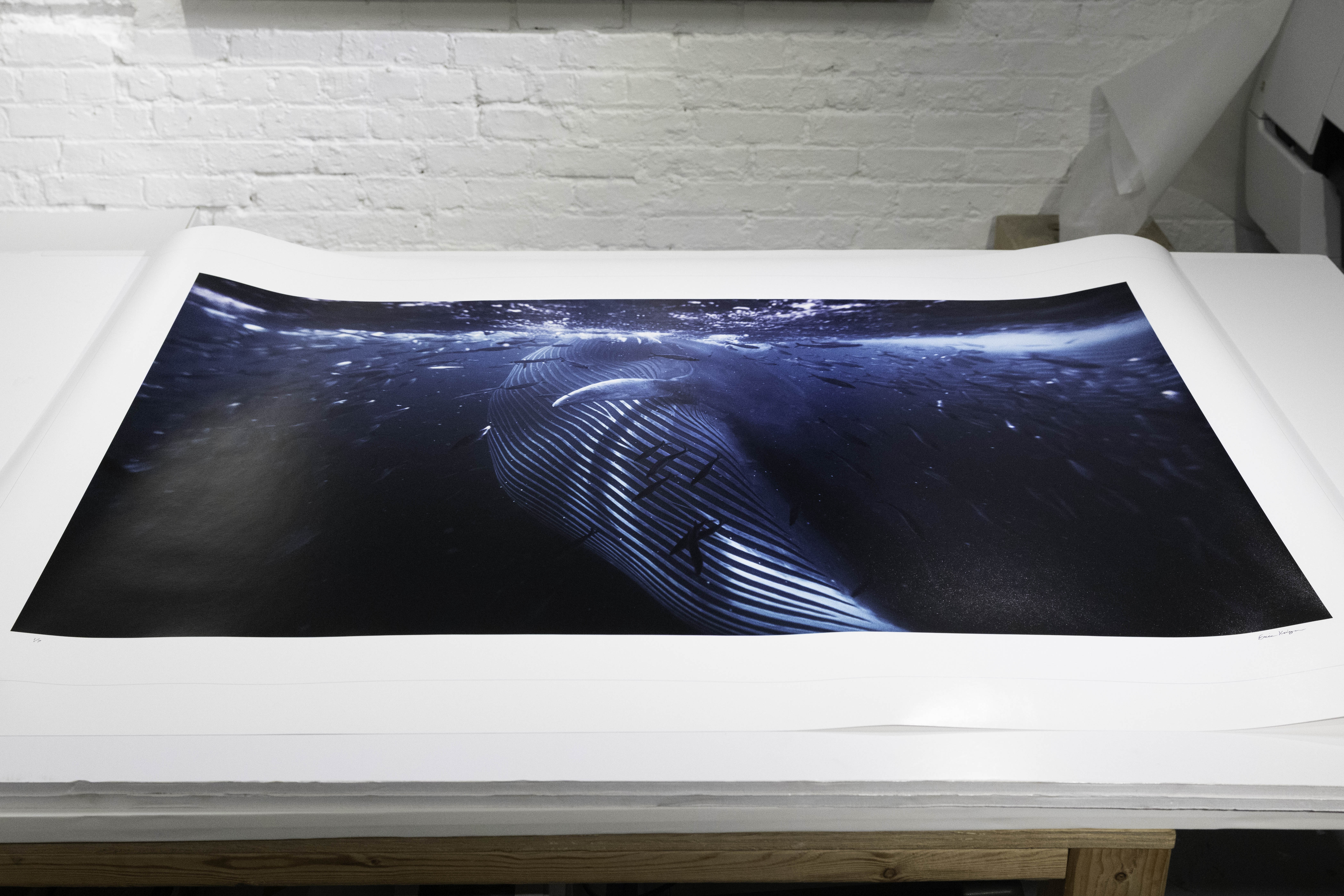
Pigment-based inks and precision digital technology achieve striking reproductions. Each print is applied directly onto archival paper using high-fidelity inkjet systems, ensuring exceptional quality and longevity.

Archival papers differ in weight, material, and texture. Each is chosen to best serve the intent of the piece—from satin finishes that enhance tonal depth, to washi papers that offers a textured, tactile feel.

Silver gelatin prints combine modern digital exposure with the same light-sensitive papers and chemical processing that have defined darkroom practice for over a century.
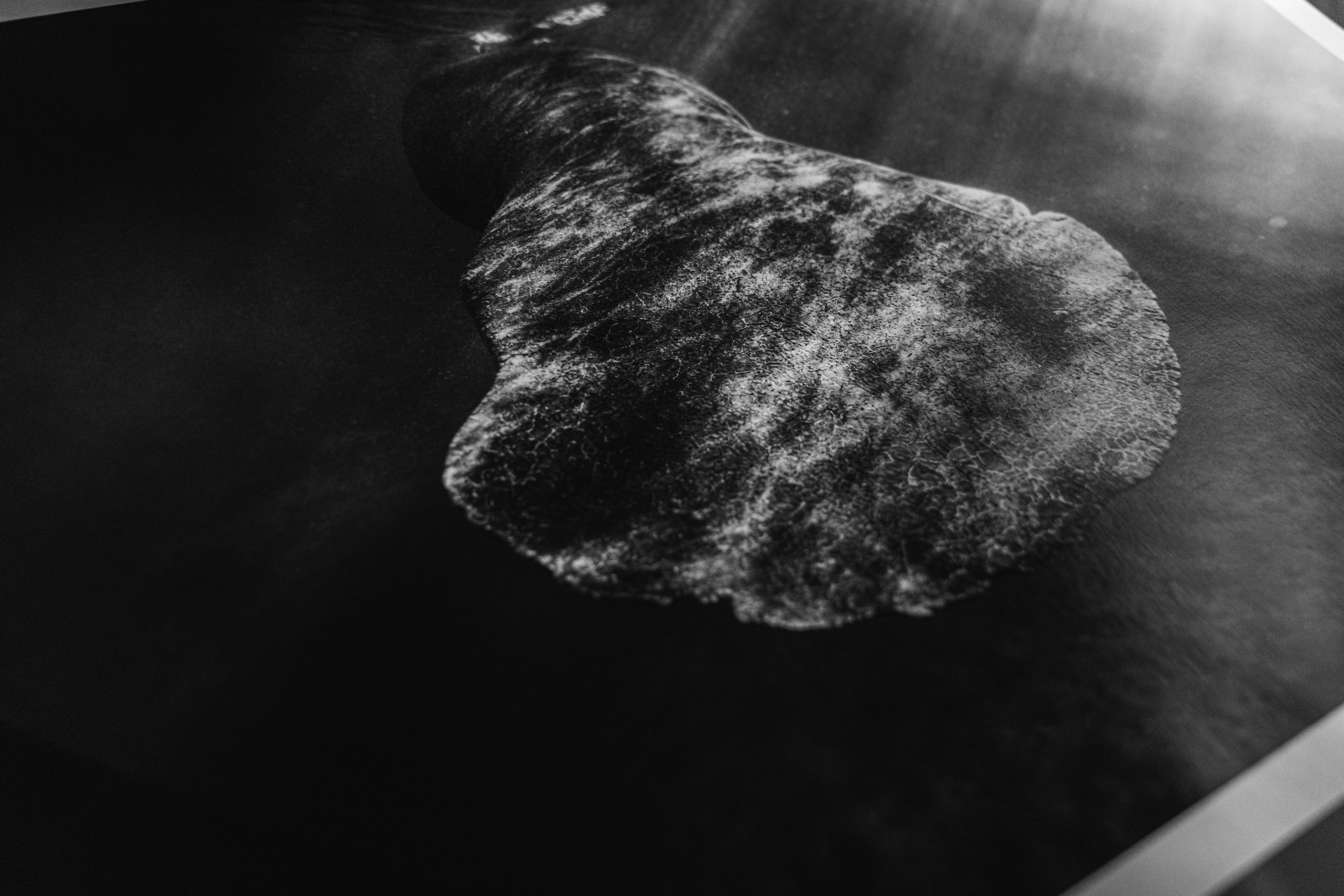
The gelatin layer renders fine detail and textures, rich blacks, and a wide tonal range, giving each print its characteristic dimensionality.
Each edition is limited to the number of prints indicated. Every work is proofed, reviewed, signed, and accompanied by a numbered Certificate of Authenticity.
A select number of Artist Proofs are reserved for the artist, family, or collectors.
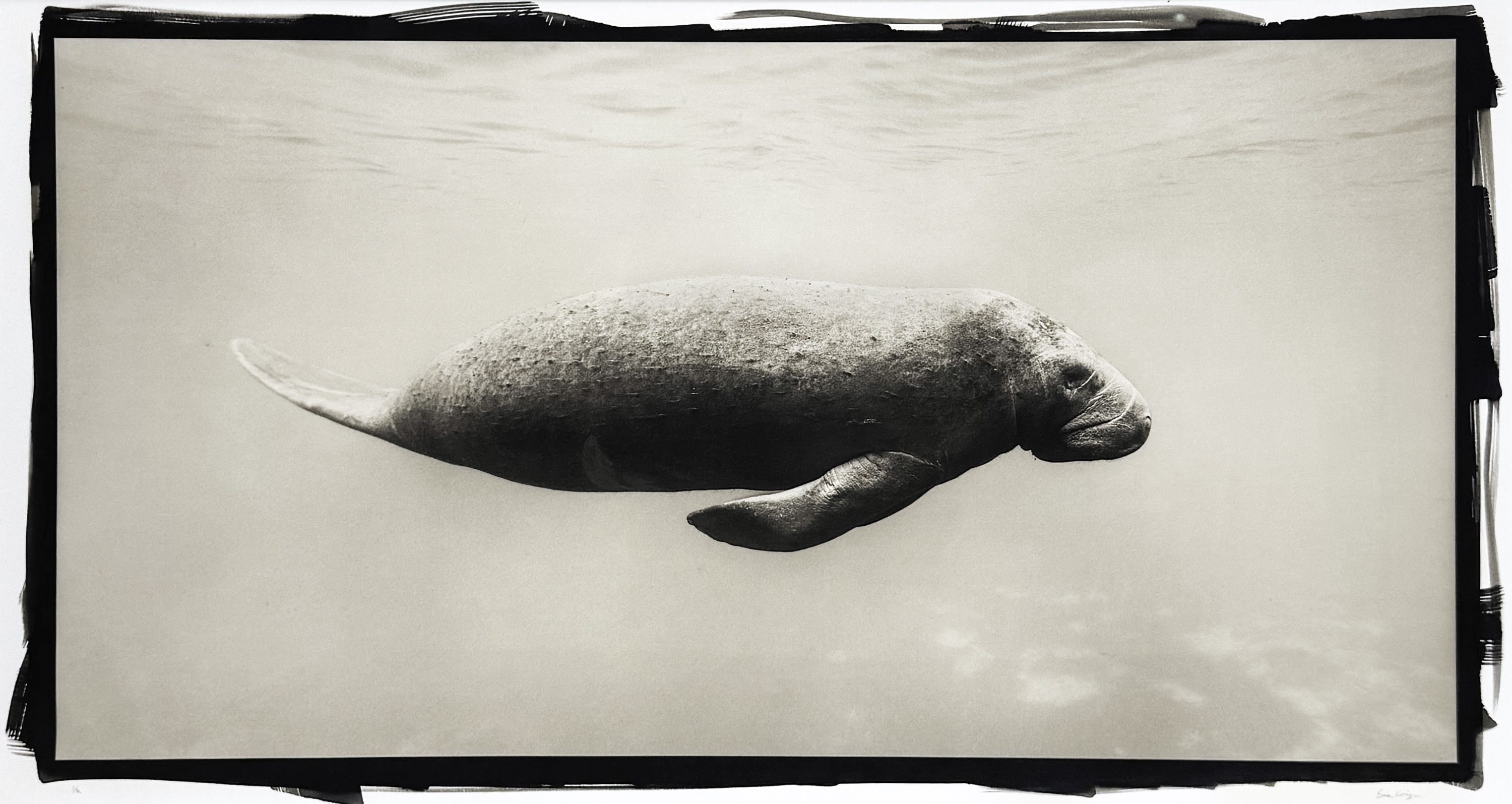

Platinum-palladium printing originated in the 19th century and remains one of the most time-honored and labor-intensive photographic processes. A digital photograph is converted into a negative, which is then used in this traditional contact method.
Each piece is prepared and produced by hand.

Platinum prints are known for their smooth tonal transitions, matte surface, and subtly warm character.
The visible brush strokes around the edges reveal the hand-coated process—no two prints will ever be the same.
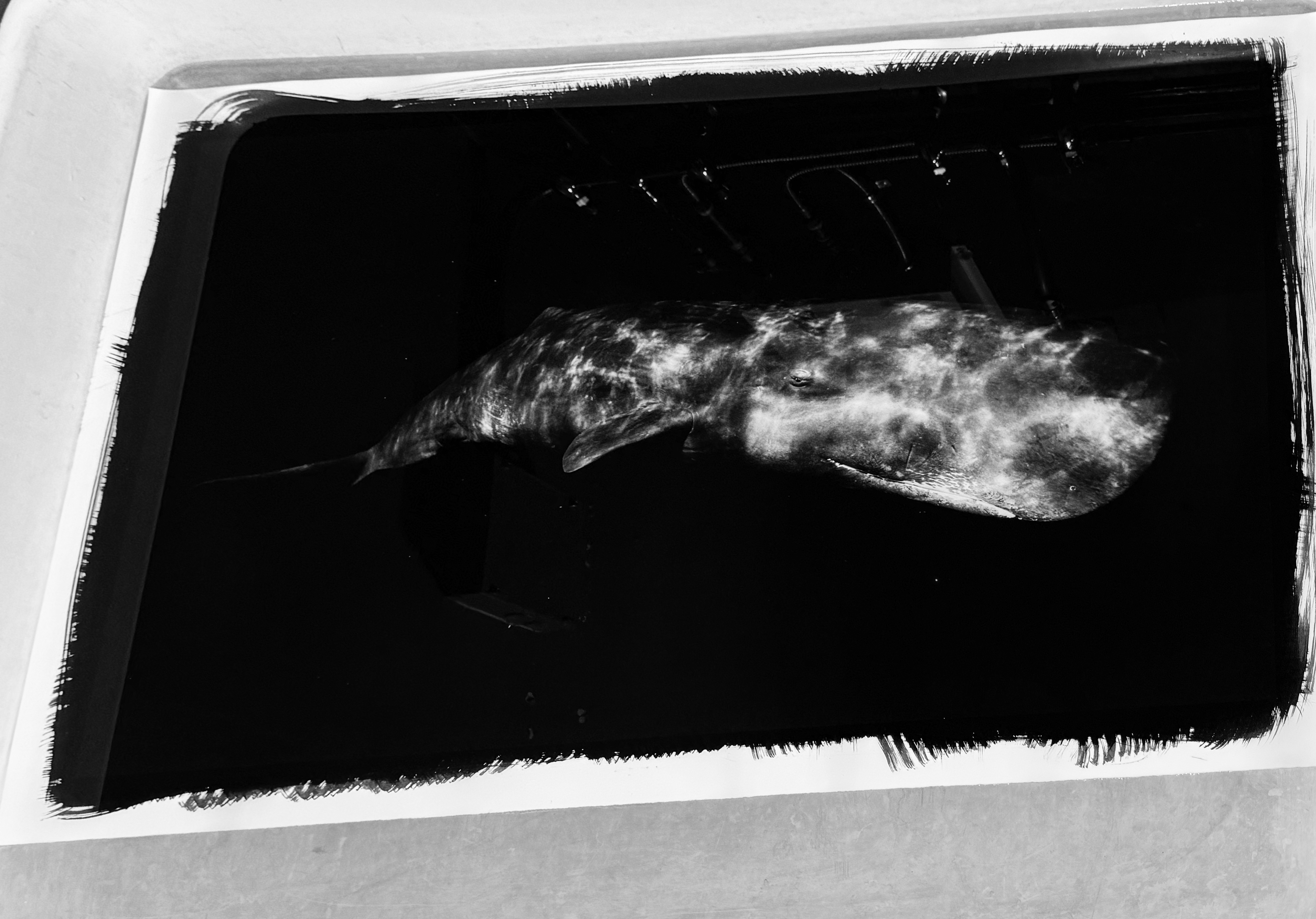
A brush-applied coating of platinum and palladium salts is exposed to ultraviolet light through a digitally produced negative. The platinum particles are activated and become physically embedded into the fibers of the paper.
The result is a print with extraordinary archival permanence measured in centuries—commonly cited at over 1,000 years.
Each edition is limited to the number of prints indicated. Every work is proofed, reviewed, signed, and accompanied by a numbered Certificate of Authenticity.
A select number of Artist Proofs are reserved for the artist, family, or collectors.
Lorem ipsum dolor sit amet, consectetur adipiscing elit, sed do eiusmod tempor incididunt ut labore et dolore magna aliqua. Ut enim ad minim veniam, quis nostrud exercitation ullamco laboris nisi ut aliquip ex ea commodo consequat. Duis aute irure dolor in reprehenderit in voluptate velit esse cillum dolore eu fugiat nulla pariatur.
Block quote
Ordered list
Unordered list
Bold text
Emphasis
Superscript
Subscript
Lorem ipsum dolor sit amet, consectetur adipiscing elit, sed do eiusmod tempor incididunt ut labore et dolore magna aliqua. Ut enim ad minim veniam, quis nostrud exercitation ullamco laboris nisi ut aliquip ex ea commodo consequat. Duis aute irure dolor in reprehenderit in voluptate velit esse cillum dolore eu fugiat nulla pariatur.
Block quote
Ordered list
Unordered list
Bold text
Emphasis
Superscript
Subscript





.jpg)


.jpg)
.jpg)

%20srgb.jpg)


