


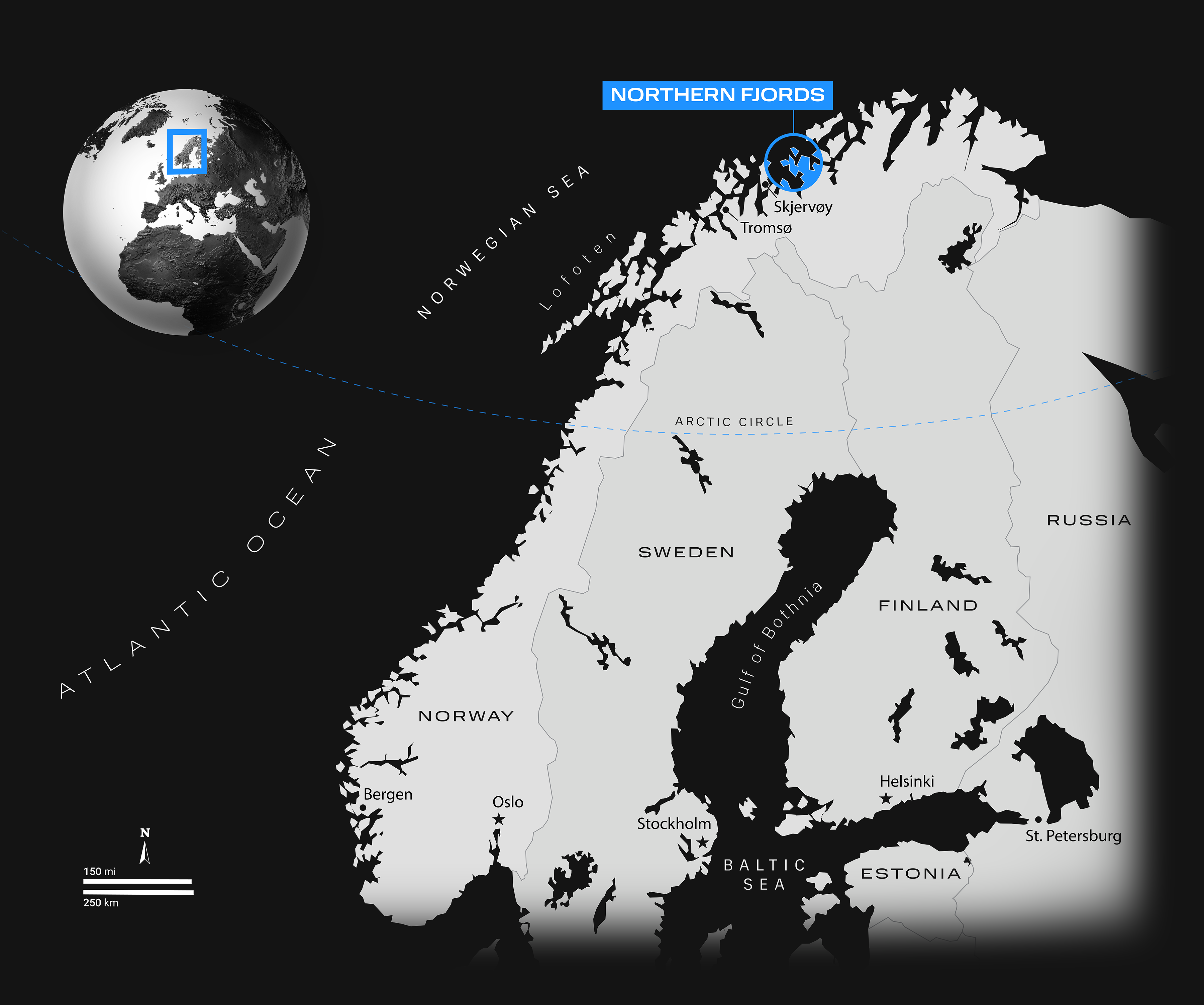
It’s said that we are made of “star stuff.” Most of the elements that compose all living things on Earth are the same ones released by exploding stars billions of years ago.
A tidbit you hear, nod at, and forget—until you find yourself floating in a glow that blurs the line between ocean and cosmos.
From the first time I took my camera underwater, particles showing up in my images became one of my greatest frustrations. This backscatter is largely out of your control. And while you can mitigate it by getting closer to your subject, fast-moving whales on the hunt don’t offer much room for adjustment.
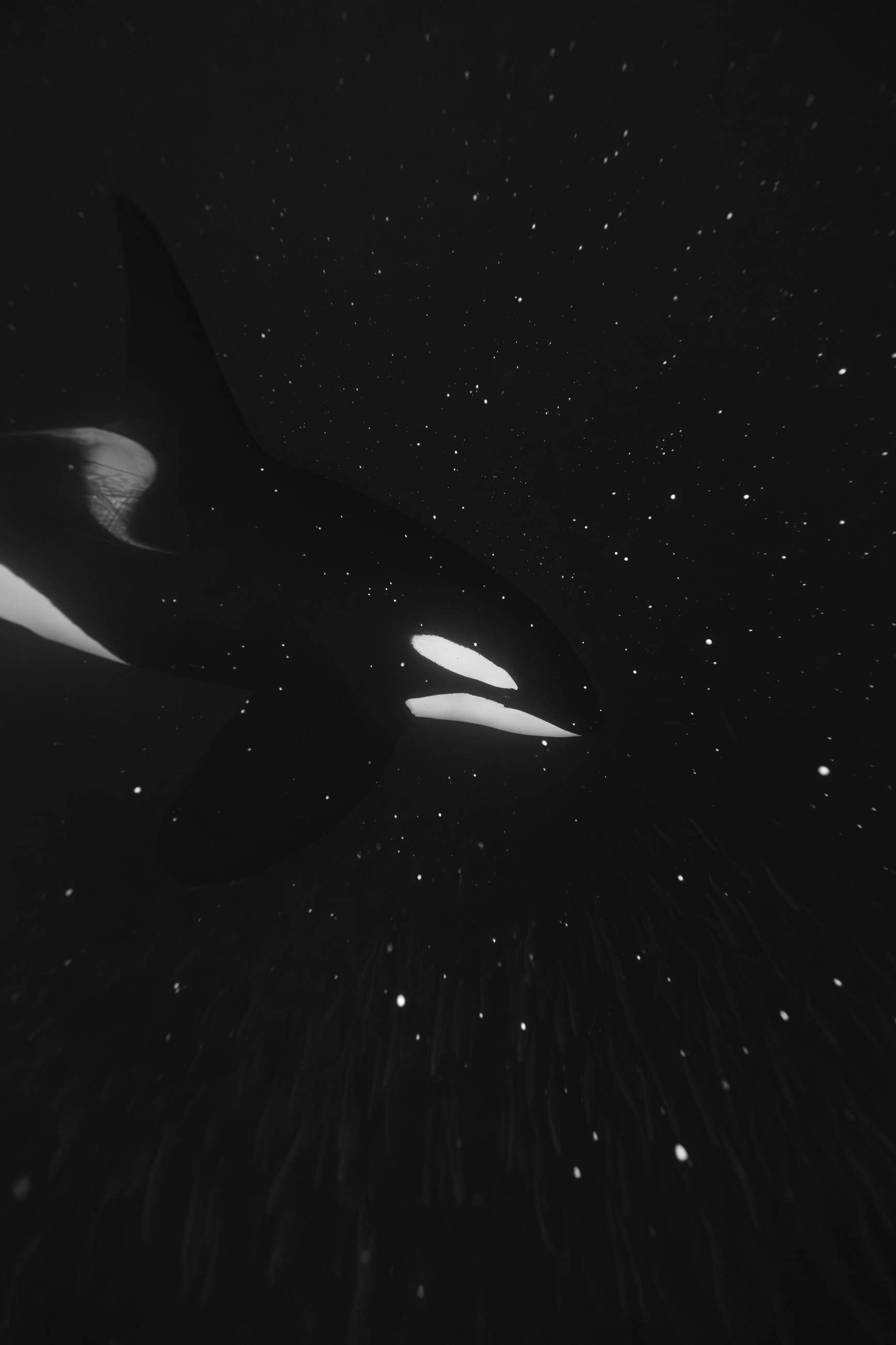
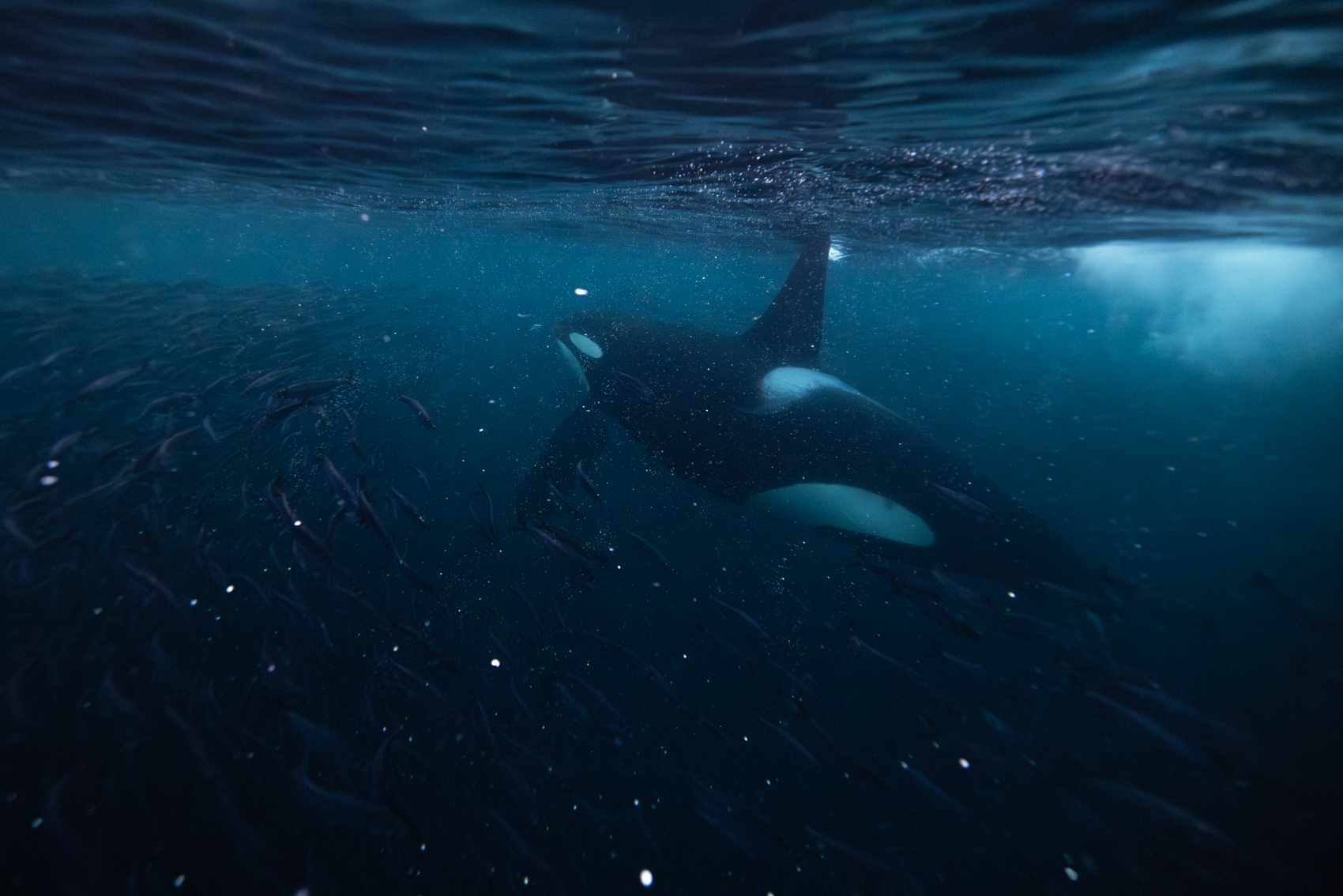
Before boarding the small Zodiac boat each morning, I was told that witnessing a bait ball hunt would make me feel like I was swimming among the stars. At the time, it seemed like one of those poetic exaggerations—how often does reality measure up to expectation?
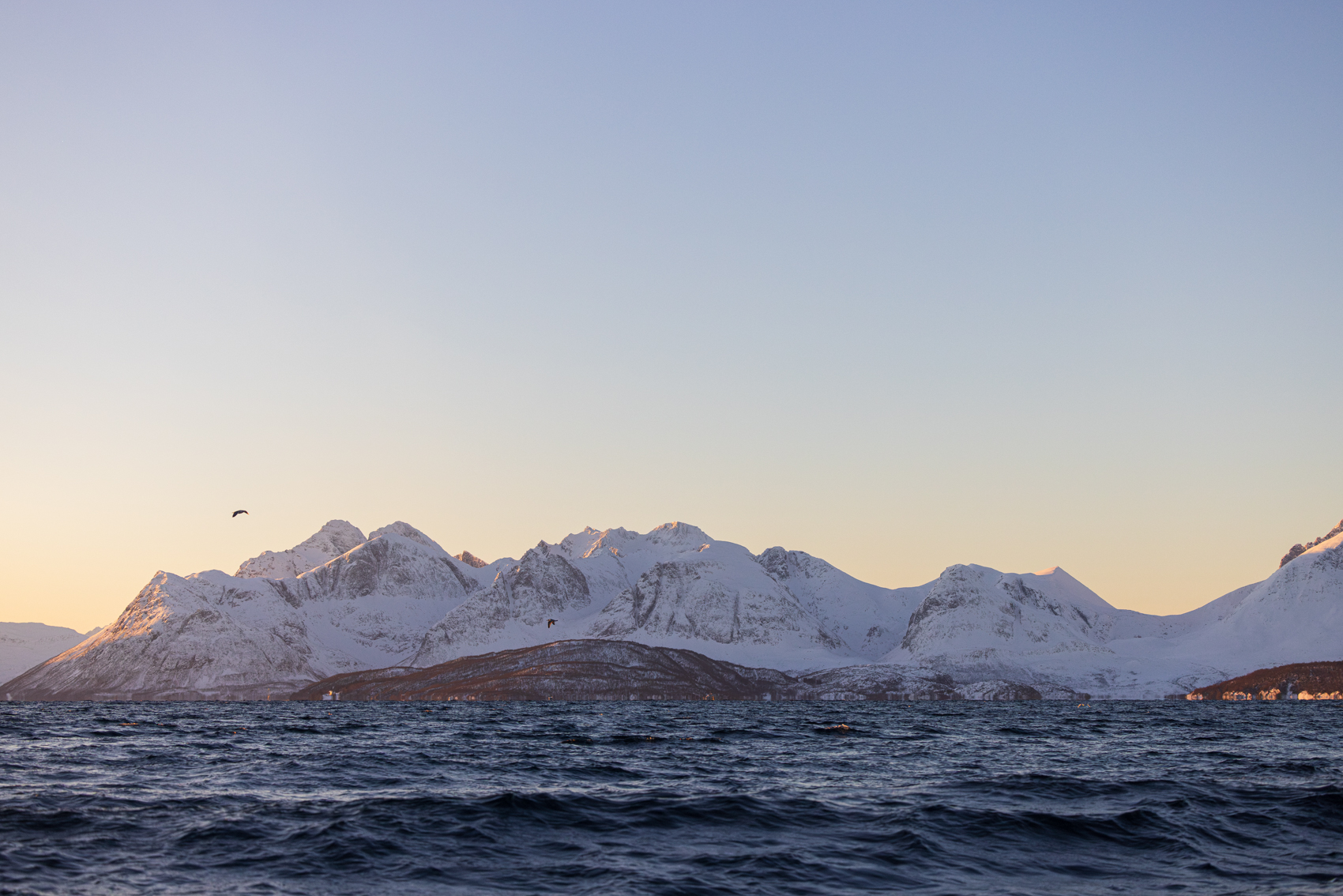
But sure enough, as orcas passed on both sides and below me, I found myself in a galaxy of particles—small, silver specks that shimmered as they caught the little light that snuck into the fjord this time of year. With water over your ears, all you hear are the squeaks of the orcas coordinating their operation. You feel suspended—adrift in the agar of a petri dish larger than your mind can grasp.
A moment far better suited for feelings than words.
You can remove backscatter from images in post-production. But this was a scene where the particles had to stay.
They complete the story.
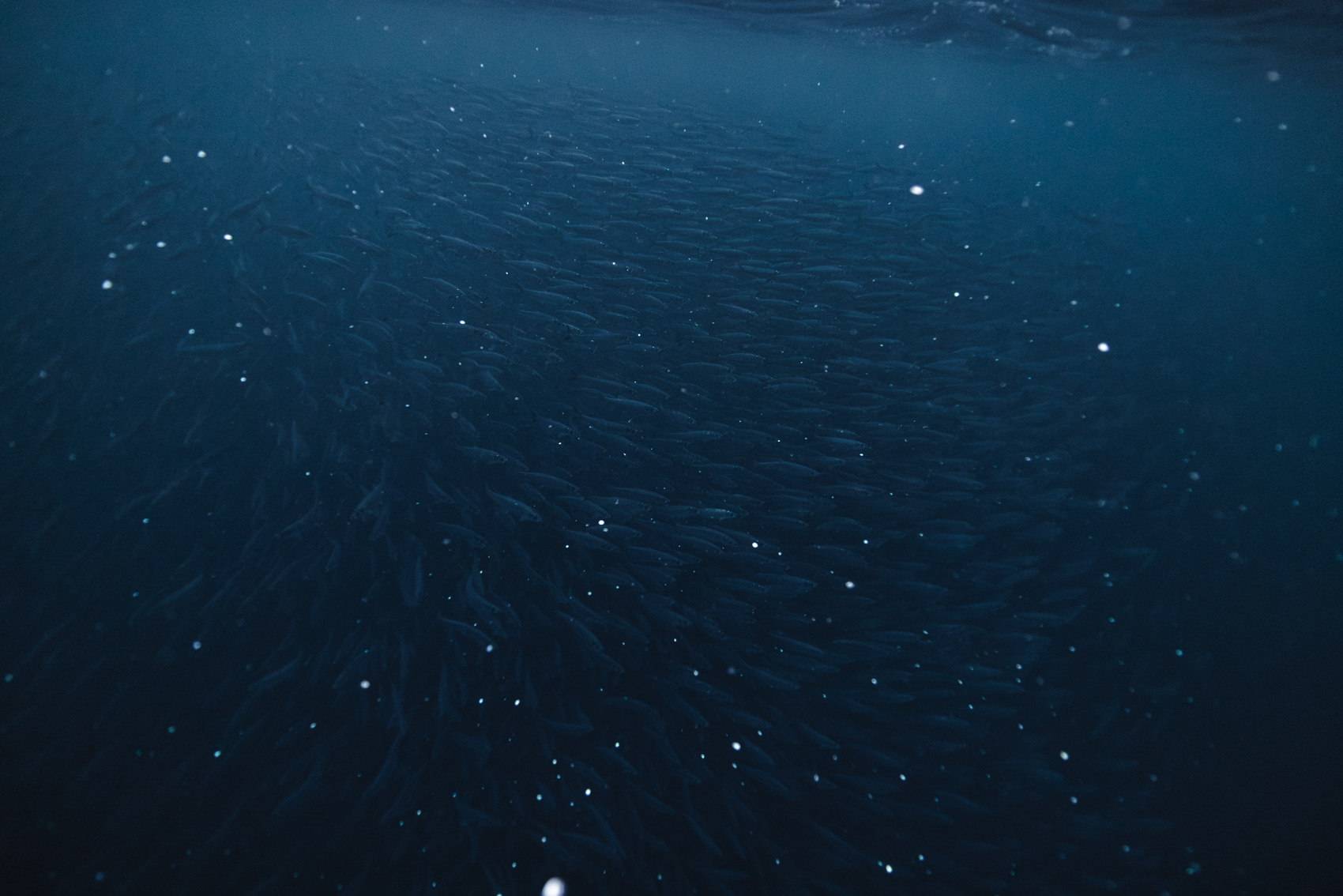
These tiny, silver flecks are the scales of the herring the orcas had eaten moments before.
In a scene full of contrasts—large and small, predator and prey, animal and human, life and death—there's a common essence. These particles are made from the same elements that once came from distant stars.
The same elements that shape the five-ton hunters.
That make up you.

LIMITED EDITION
A moment captured for a life on paper.
Eric works with a renowned print studio in Brooklyn, New York, known for decades of expertise in archival pigment printing. The local lab allows for a collaborative approach, ensuring that his intended vision is expressed in the final artwork. When cared for properly, archival pigment prints can last for over a century.
Archival Pigment Prints
Modern printmaking, refined. Pigment prints utilize state-of-the-art digital technology and high-quality pigment-based inks to achieve striking reproductions. A digital image is applied directly onto the paper using precision inkjet printers, ensuring both image quality and longevity.
Vision meets the surface. Archival papers differ in weight, material, and texture. A paper is chosen to best suit the intent of the piece, from satin finishes to enhance rich shadows and colors, to handmade Japanese rice paper that offers a more textured and vintage feel.
The edition size ensures that only the number of prints indicated will ever be produced. Each print is proofed, reviewed, numbered, and signed by Eric, and includes a Certificate of Authenticity that is unique to your artwork.
Prices from $3,500 USD
18'' x 12'' / 45.7 x 30.5 cm
Edition of 3 + 2 AP
Larger pieces available by commission
There’s a fine line between close and too close in wildlife photography—and sometimes it’s the animals who cross it. There’s little you can do when a bait ball swirls beneath you and a few tons of blubber barrel against your legs.



.webp)
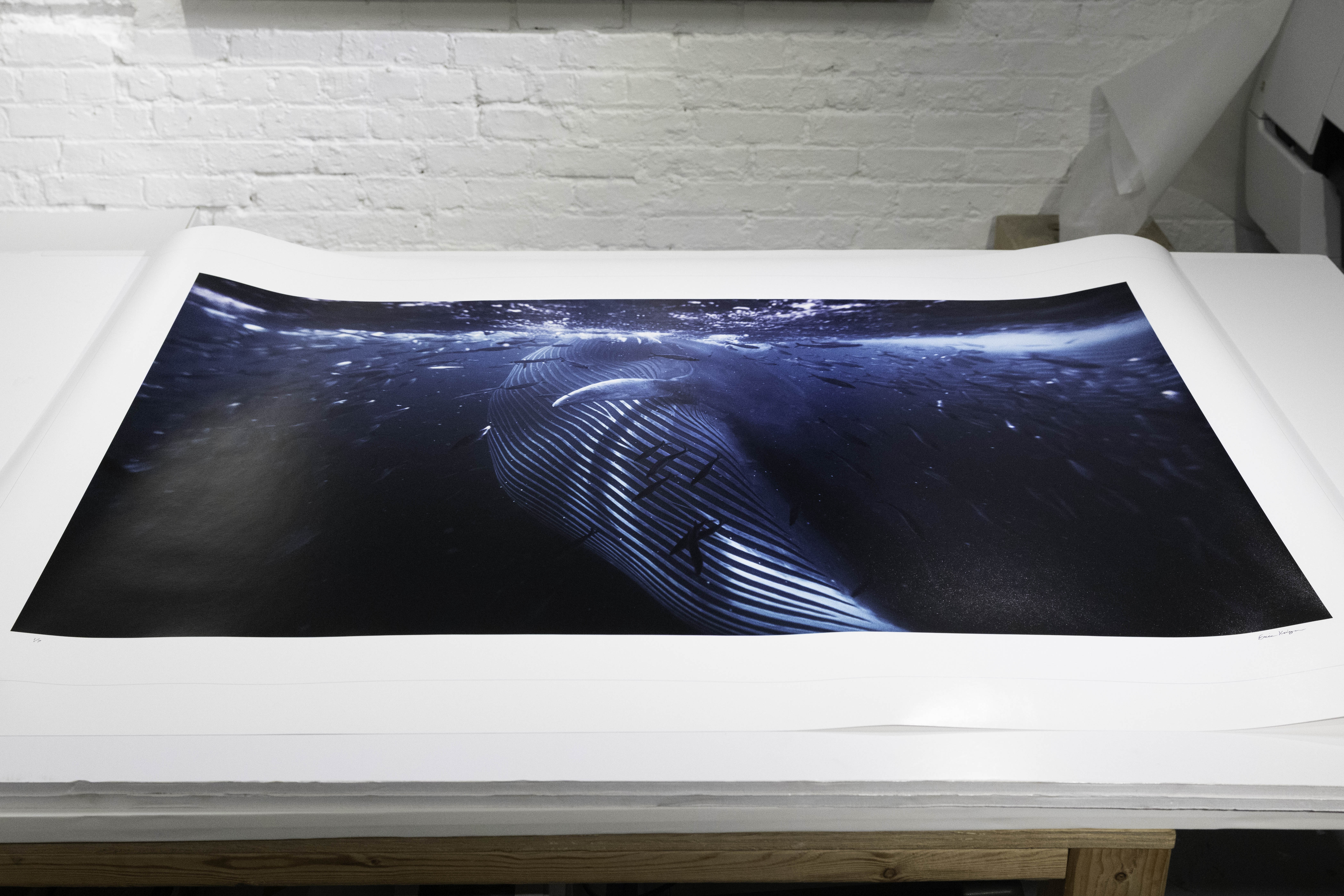
Pigment-based inks and precision digital technology achieve striking reproductions. Each print is applied directly onto archival paper using high-fidelity inkjet systems, ensuring exceptional quality and longevity.

Archival papers differ in weight, material, and texture. Each is chosen to best serve the intent of the piece—from satin finishes that enhance tonal depth, to washi papers that offers a textured, tactile feel.

Silver gelatin prints combine modern digital exposure with the same light-sensitive papers and chemical processing that have defined darkroom practice for over a century.
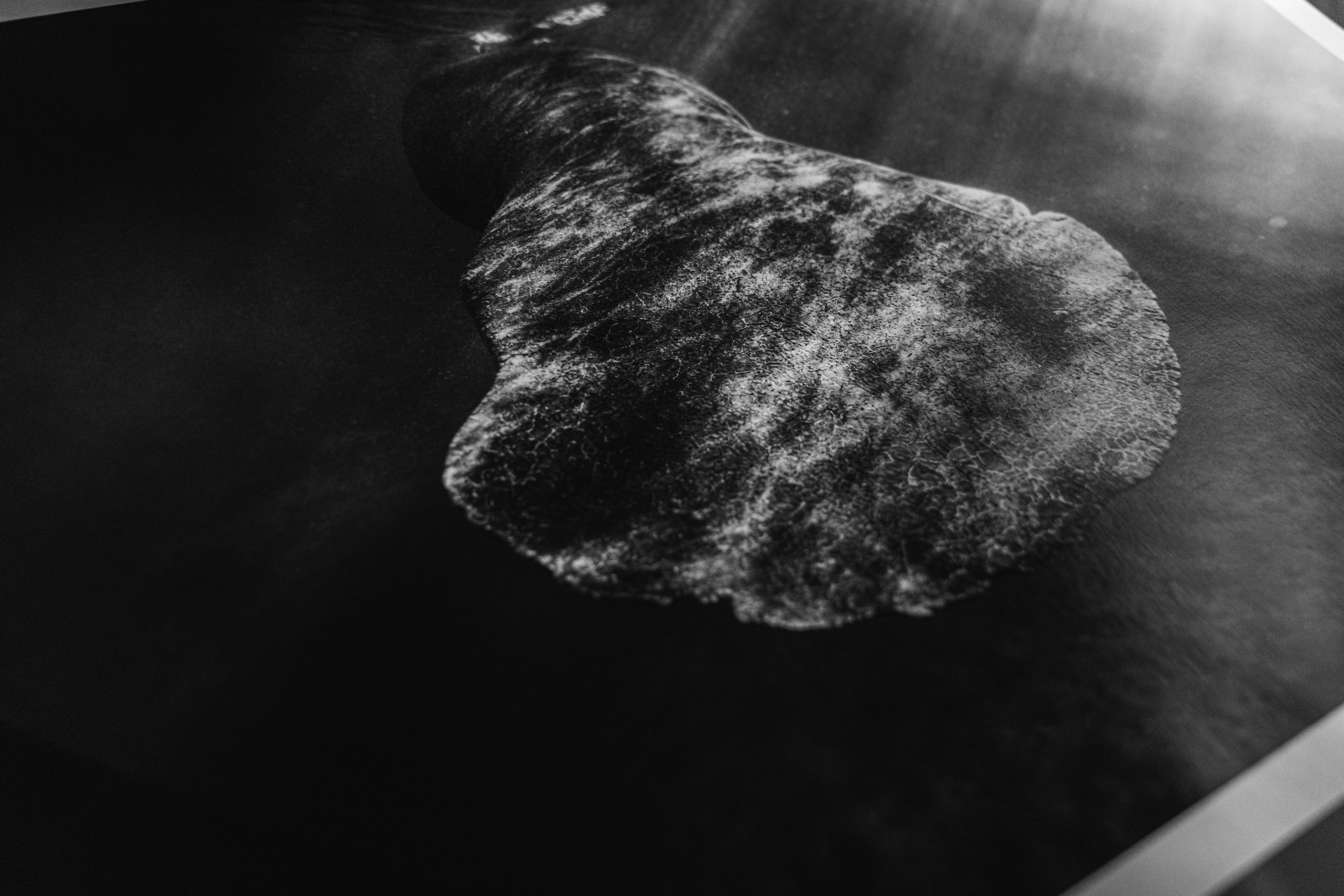
The gelatin layer renders fine detail and textures, rich blacks, and a wide tonal range, giving each print its characteristic dimensionality.
Each edition is limited to the number of prints indicated. Every work is proofed, reviewed, signed, and accompanied by a numbered Certificate of Authenticity.
A select number of Artist Proofs are reserved for the artist, family, or collectors.
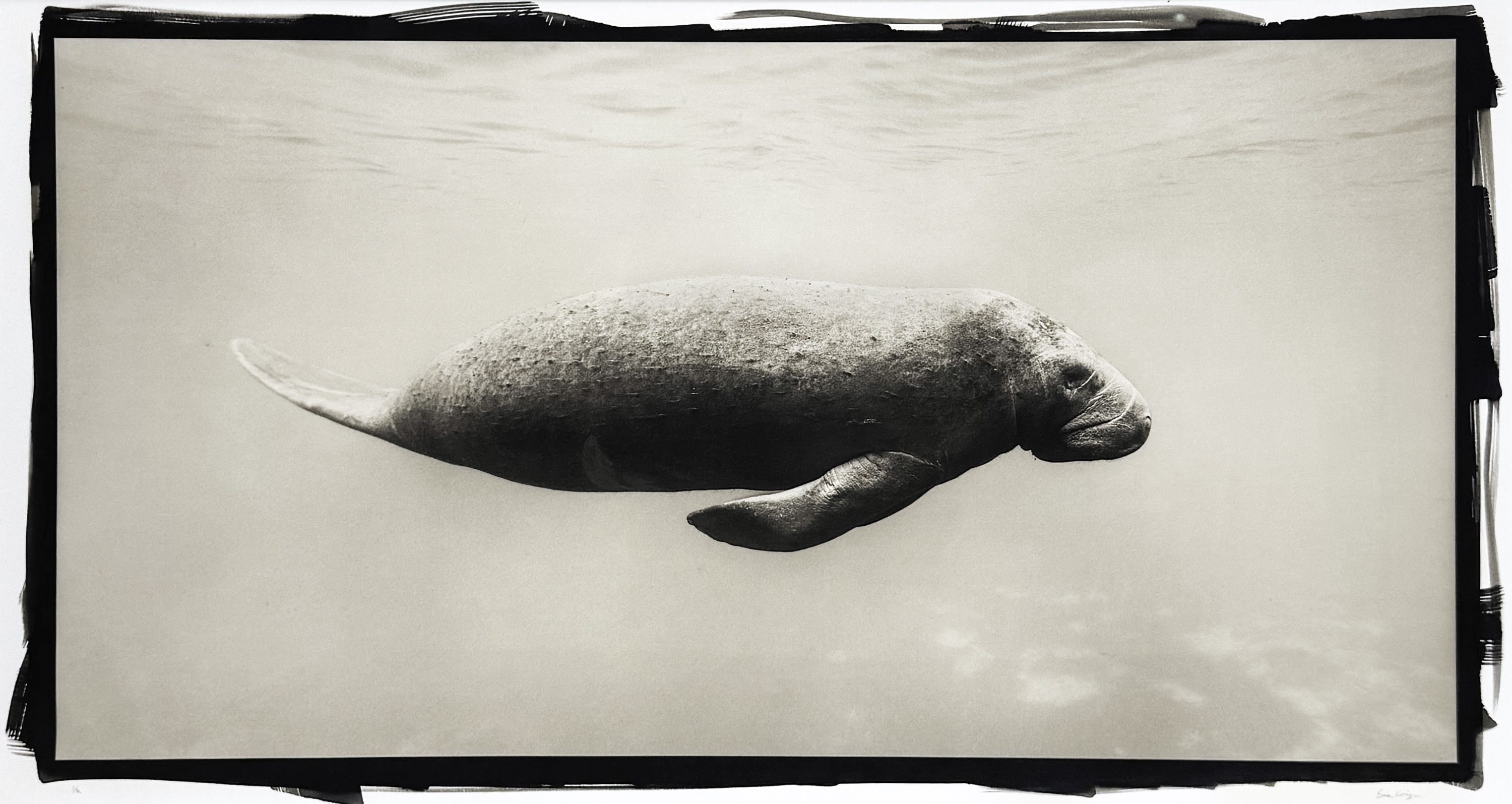

Platinum-palladium printing originated in the 19th century and remains one of the most time-honored and labor-intensive photographic processes. A digital photograph is converted into a negative, which is then used in this traditional contact method.
Each piece is prepared and produced by hand.

Platinum prints are known for their smooth tonal transitions, matte surface, and subtly warm character.
The visible brush strokes around the edges reveal the hand-coated process—no two prints will ever be the same.
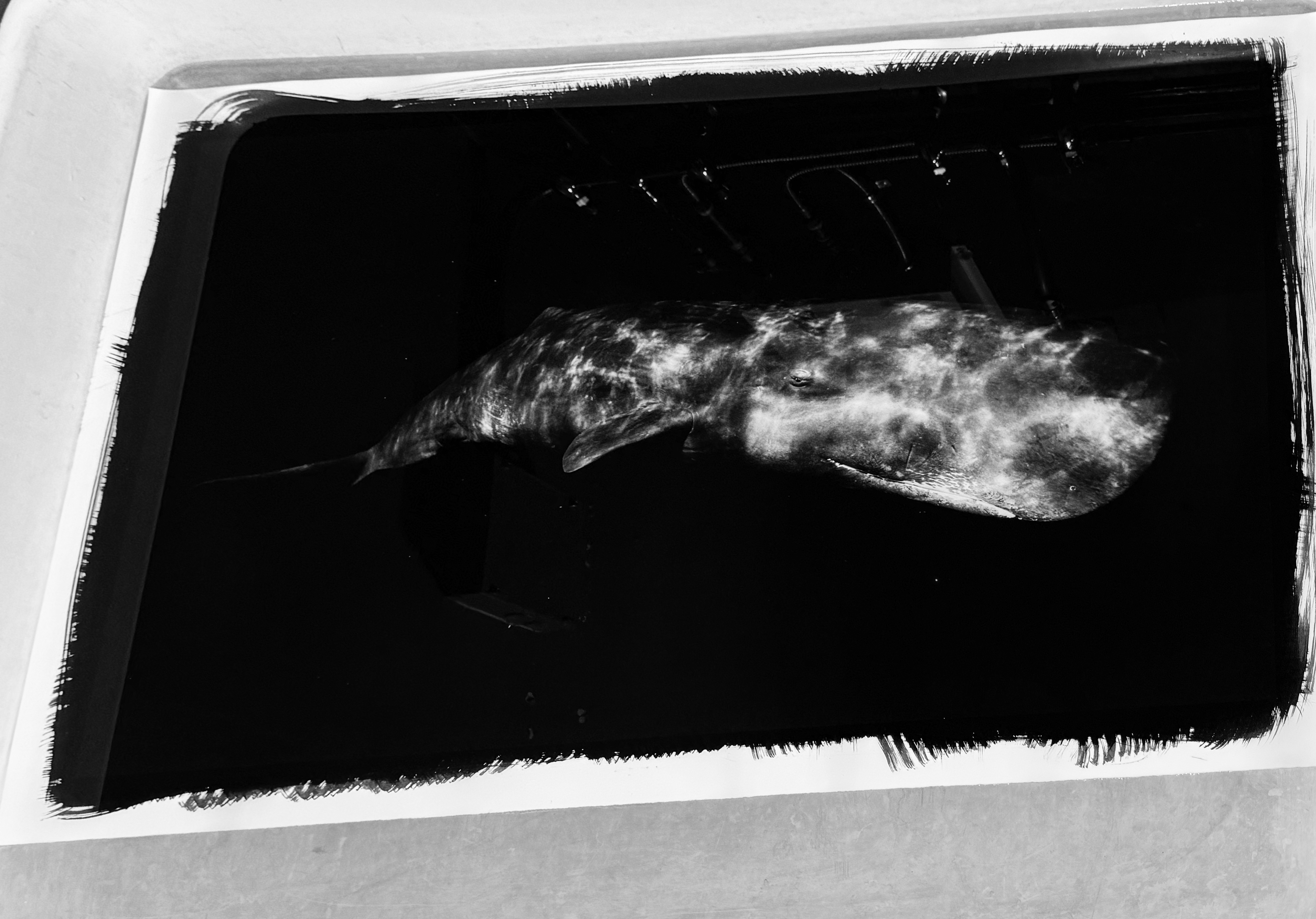
A brush-applied coating of platinum and palladium salts is exposed to ultraviolet light through a digitally produced negative. The platinum particles are activated and become physically embedded into the fibers of the paper.
The result is a print with extraordinary archival permanence measured in centuries—commonly cited at over 1,000 years.
Each edition is limited to the number of prints indicated. Every work is proofed, reviewed, signed, and accompanied by a numbered Certificate of Authenticity.
A select number of Artist Proofs are reserved for the artist, family, or collectors.
Lorem ipsum dolor sit amet, consectetur adipiscing elit, sed do eiusmod tempor incididunt ut labore et dolore magna aliqua. Ut enim ad minim veniam, quis nostrud exercitation ullamco laboris nisi ut aliquip ex ea commodo consequat. Duis aute irure dolor in reprehenderit in voluptate velit esse cillum dolore eu fugiat nulla pariatur.
Block quote
Ordered list
Unordered list
Bold text
Emphasis
Superscript
Subscript
Lorem ipsum dolor sit amet, consectetur adipiscing elit, sed do eiusmod tempor incididunt ut labore et dolore magna aliqua. Ut enim ad minim veniam, quis nostrud exercitation ullamco laboris nisi ut aliquip ex ea commodo consequat. Duis aute irure dolor in reprehenderit in voluptate velit esse cillum dolore eu fugiat nulla pariatur.
Block quote
Ordered list
Unordered list
Bold text
Emphasis
Superscript
Subscript





.jpg)


.jpg)
.jpg)

%20srgb.jpg)


